


The City Palace Preface
The Mor Chowk
The Mor Chowk or the Peacock Courtyard with one peacocks each in the south and the north veranda and three in the east wall of the courtyard. This courtyard and the Manek Mahal beyond were constructed during the reign of Maharana Karan Singh (r. 1620 - 1628 CE) and Maharana Sajjan Singh (r. 1874 - 1884 CE) added the magnificent peacocks with colored Belgium glass and mirror mosaic- inlay work later. The higher wall in the east of this courtyard was in a very bad state, over the years due to hail, rain and sun shine. In 2004 - 2005, the local artisans at a cost of over half a million rupees restored this wall. The time taken was 14 months. This courtyard was used for special audience and Maharana Bheem Singh (r.1778 - 1828 CE) first met Capt. James Tod here to sign the historic treaty of 1818 between The East India Company and Mewar. The glass inlay work and the mirror tiles were placed during the reign of Maharana Swarup Singh (r. 1842 - 1861 CE).
The courtyard is now used for special parties or function for which special decorations with flower and lights are made. This Peacock courtyard probably unparalleled in India, comprises of three daunting peacocks created with blue glass and mirror pieces. Long before independent India could make 'peacock' the national bird, Mewar paid its homage to this dazzling Indian bird. It is one of the major highlights of the tourist trail. The peacocks made of exquisitely inlaid glass mosaic work are considered masterpieces of great skill and artistry of the highly appreciated features in the museum. It is also an important transit point in the tourist trail, as hereon one move on to the Zenana Mahal from the Mardana Mahal through a narrow passage accessed from this chowk.
Like the Manek Chowk, this courtyard also finds depiction in a large number of Rajput paintings of different periods. A close study of these reveals the usage pattern as well as the architectural evolution in the surrounding structures of this chowk. Cultural performances, special durbars with nobles, where special guests were received marking historic turning points were all held in this chowk. As existing exit point for the Mardana Mahal in the museum itinerary and for occasional cultural performances in the evening and as part of special arts trail. Interpretation of the significance of the glass inlay work and stories of the durbars held has been made accessible to all by making existing elevator operational for the differently-abled.
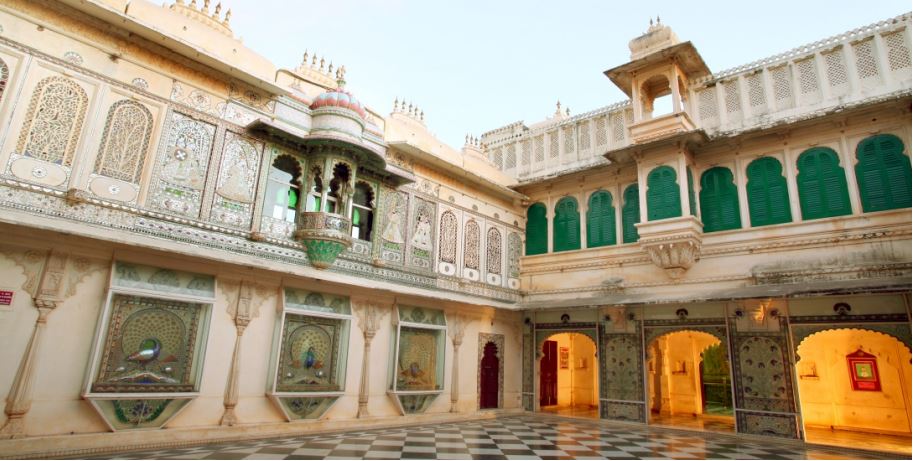
The Mor Chowk, The City Palace
| First | Prev | 03 | Next | Last |