


The Mor Chowk: Where Mewar Turned Glass into Light
|
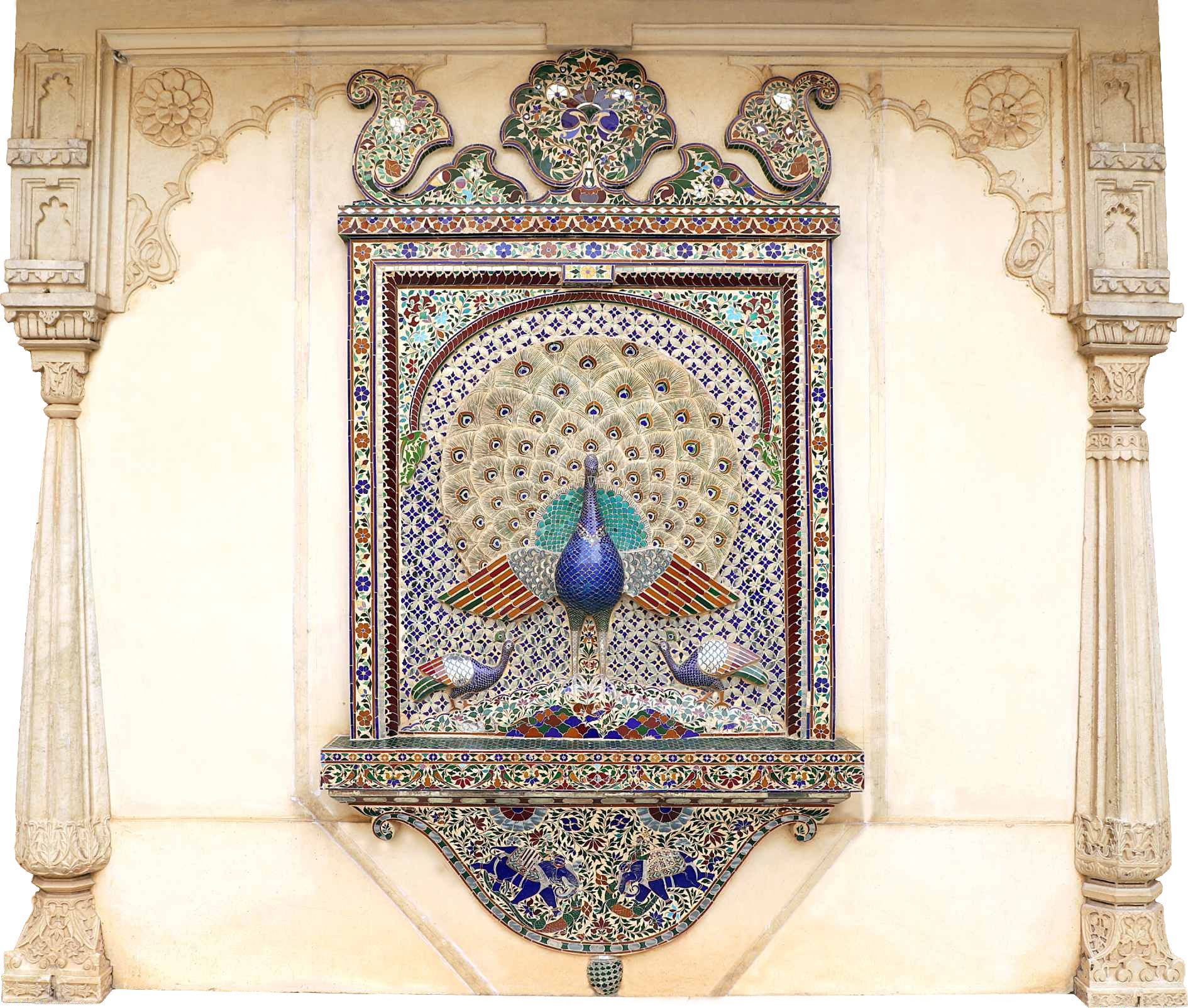
On a monsoon morning, when the air of Udaipur is washed clean and the ancient stones of The City Palace seem to breathe a little deeper, a walk through its narrow passages can lead to an unexpected moment of wonder. The walls open into the sky and suddenly you find yourself standing in Mor Chowk. Before you is a breathtaking tapestry of colour. Thousands of tiny pieces of coloured glass and mirror catch the soft monsoon light, transforming the walls into jewel-like surfaces. The peacocks appear to shimmer, their feathers alive with blue, green, gold and other brilliant hues. For a moment, time seems to stand still. |
|
Maharana Sajjan Singh (r. 1874-1884 CE). The three principal peacocks on the eastern wall are traditionally associated with the three seasons of Mewar-summer, monsoon and winter.Their vibrant colours reinforce this connection with nature, while the peacock itself has a particularly deep association with Rajasthan. Its appearance and call, especially with the arrival of the monsoon, have long been woven into the cultural imagination of the region. Here, nature and royal artistry meet. The peacock is not merely a decorative motif; it becomes a living expression of season, landscape and the artistic imagination of Mewar. |
|
Yet Mor Chowk is not simply a celebration of beauty. It is a remarkable layering of Mewar's architectural, artistic and political history. |
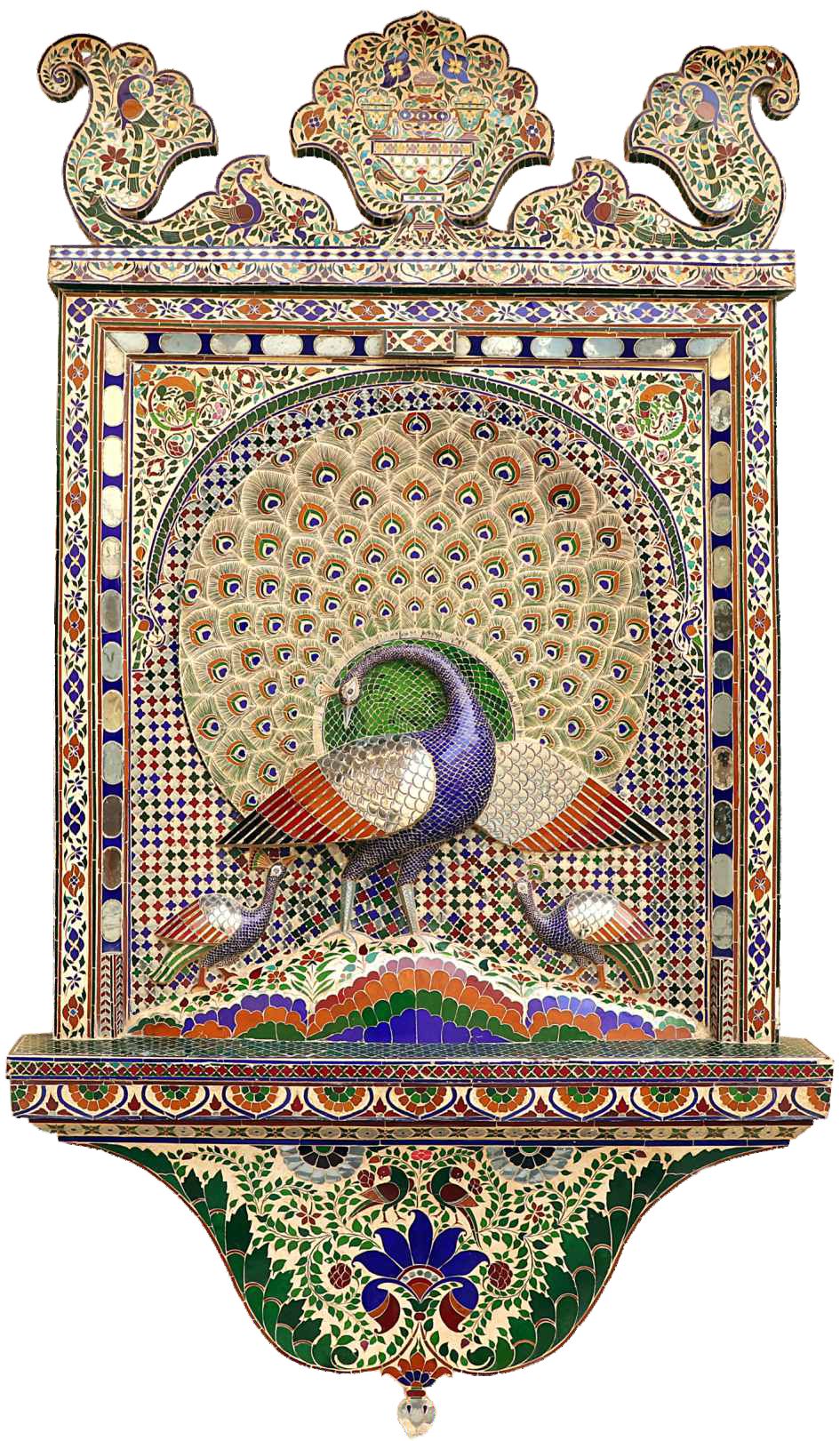
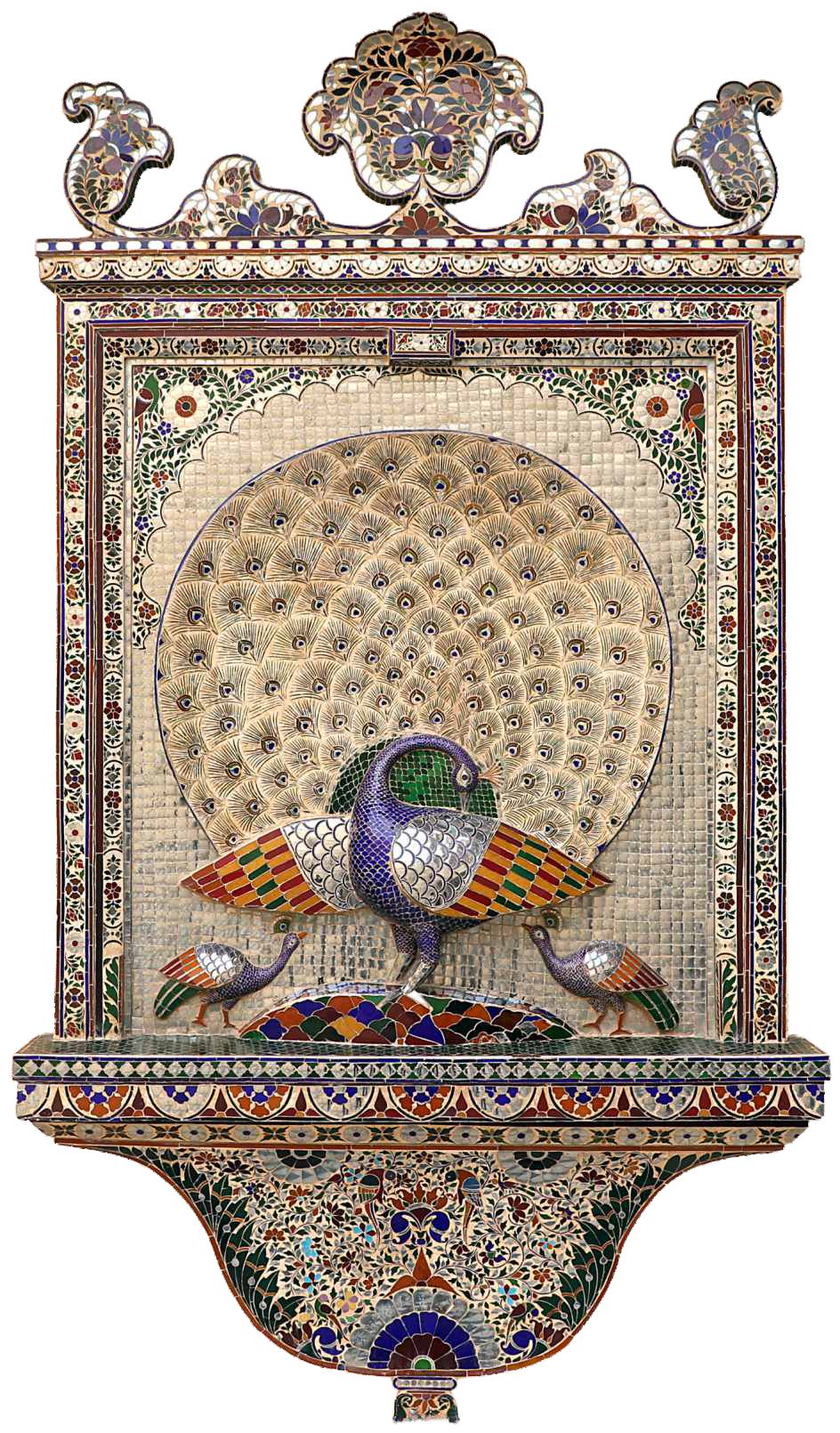
The Art of Thikri But how was such extraordinary work created? The technique belongs to the tradition of Thikri, or glass-inlay work, a specialised craft associated with the |
|
The courtyard dates to the reign of Maharana Karan Singh (r. 1620-1628 CE), while the exquisite glass-inlay tradition visible today belongs largely to the 19th century. Glass and mirror work was introduced during the reign of Maharana Swarup Singh (r. 1842-1861 CE) and the celebrated peacock compositions were completed during the reign of |
decorative arts of Rajasthan. The process was painstaking. Artisans first developed the design and established the raised form of the composition. Small pieces of coloured glass and mirror were then individually cut and shaped to fit specific portions of the design. Traditional craftsmen used specialised cutting implements, including diamond-edged tools, to. |
|
www.eternalmewar.in
| First | Prev | 04 | Next | Last |