


A patron of welfare and infrastructure, he expanded schools, hospitals, and dispensaries, built canals, planned new roads, laid the foundation of the Chittor-Udaipur railway, and developed Sajjan Niwas Bagh (Gulab Bagh), which also housed Mewar's first zoo. His contributions to education included founding schools across Mewar, appointing teachers for girls' education, and supporting the creation of Sajjan School and Sajjan Hospital.
Deeply passionate about knowledge, art, and literature, he established the first History Department of Mewar under Kaviraj Shyamaldas, promoted libraries, and founded the Sajjan Yantralaya Press, which published Sajjan Kirti Sudhakar, Mewar's first state newspaper. He was also a patron of poets and scholars, regularly hosting literary gatherings.
During his reign, important architectural projects such as Shiv Niwas Palace, Sajjan Niwas (Jag Niwas Island), and Sajjangarh Fort were initiated. His efforts in restoring forts, developing gardens, and expanding infrastructure highlighted his progressive vision. Honored with the title GCSI by the British in 1881, Maharana Sajjan Singh passed away on December 23, 1884, leaving behind a legacy of reform, culture, and public welfare.
Maharana Karan Singh (r. 1620-1628 CE)
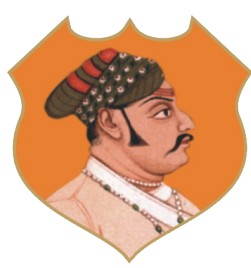
On August 6, 2025, the Maharana of
Mewar Charitable Foundation celebrated the 442nd birth
anniversary of Maharana Karan Singh.
Born on Shravan Shukla 12, Samvat
1640, he was the eldest son of
Maharana Amar Singh I and Saheb
Kunwar. Ascending the throne in 1620.
CE, Maharana Karan Singh assumed administrative powers
even during his father's lifetime, as Amar Singh had
withdrawn from state affairs following the Mughal treaty of
1615
His reign marked a period of relative peace, during which he worked on judicial, administrative, and economic reforms, reviving Mewar's trade centres. He maintained diplomatic ties with the Mughals and extended hospitality to Prince Khurram (later Emperor Shah Jahan) when he sought refuge in Udaipur in 1622, strengthening relations through the symbolic exchange of turbans. A patron of religion and culture, Maharana Karan Singh restored temples destroyed by Mughal commanders, including the renowned Jain temples at Ranakpur.
He also undertook significant construction works within the Udaipur City Palace complex, including Manek Chowk, Suraj Pol, Ganesh Chowk, Karan Mahal, Mor Chowk, Dilkhushal Mahal, Moti Mahal and portions of the Zenana Mahal.
Maharana Karan Singh ruled for eight years before his untimely death in March 1628 CE. His legacy is reflected in both his efforts at stabilizing Mewar and in the grand contributions he made to the architecture of Udaipur.
Maharana Pratap Singh II (r. 1751-1754 CE)
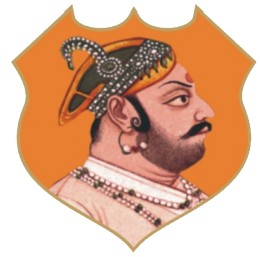
On August 12, 2025, the Maharana of
Mewar Charitable Foundation
commemorated the 301st birth
anniversary of Maharana Pratap Singh
II. Born on Bhadwa Krishna 3, Vikram
Samvat 1781, he was the son of
Maharana Jagat Singh II and Maan
Kunwar Solanki.
Pratap Singh II ascended the throne on June 5, 1751,
supported by Rawat Jait Singh of Salumber, but his reign was
marked by instability. Internal conflicts among nobles
weakened his authority, leading to repeated Maratha raids
in Mewar. Despite his efforts to improve conditions for his
people, his short reign ended with his death on January 10,
1754 CE.
Maharana Sardar Singh (r. 1838-1842 CE)
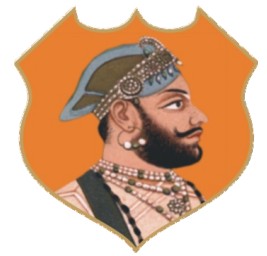
On August 12, 2025, the Foundation
celebrated the 227th birth anniversary
of Maharana Sardar Singh. Born on
Bhadwa Krishna 3, Vikram Samvat
1855, he was the son of Maharaj
Shivdan Singh of Bagore. Following the
death of Maharana Jawan Singh
without an heir, Sardar Singh was
adopted and ascended the throne on September 4, 1838 CE.
His reign saw political divisions among nobles and tribal unrest, leading to the establishment of the Mewar Bhil Corps in 1841 at Kherwada to maintain order. That same year, he undertook a religious pilgrimage to Gaya, performing the Sharad Karma of his predecessor.
Maharana Sardar Singh also built the Sardar Swarup Shyam Temple on the banks of Lake Pichola. Falling gravely ill, he adopted his younger brother Swarup Singh as successor on October 23, 1841, before passing away on July 14, 1842 CE.
| First | Prev | 26 | Next | Last |